



Title: Beastro
Release: June 11, 2026
Platform: PC PS5 Xbox Series X/S
Developer: Timberline Studio
Publisher: Timberline Studio, Kepler Ghost
Genre: Cozy, Deckbuilder, Farming Sim
ESRB: E
Reviewed on: PC
Time Played: 13 Hours
--- WELCOME TO BEASTRO ---
I spent all morning farming and cooking a highly specific meal to deal with the sweet enemies I knew were in the area. I planned everything perfectly. But I took the wrong path, where an oddball flavor monster was waiting for me. This new monster is about to attack with a flavor I have absolutely no cards to counter. Because of that single oversight, I fail right away, and my venture is cut short. The caretaker is yanked out of the wilds, losing some of the materials I’d gained on the trip. It really sucks to spend a lot of time and ingredients on a meal only to have it all wasted on a ruined journey… I can’t wait to start the next day and try a different approach!
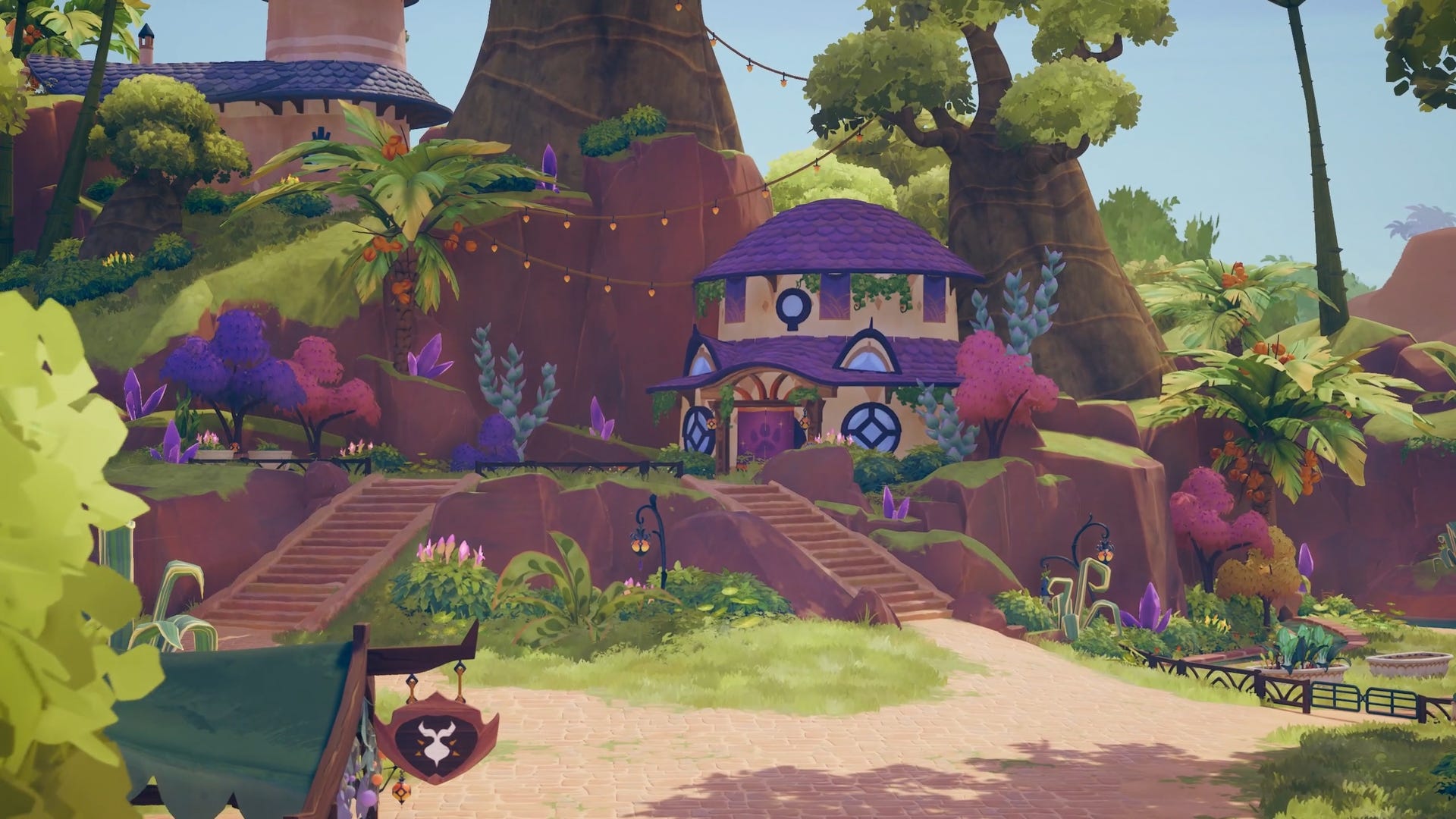
That’s how one of many different ventures can go in Beastro. Here you’re dropped into the shoes of Panko, a hardworking Sous Chef living in the bright and colorful town of Palo Pori. One morning, you wake to find the Head Chef missing and your restaurant in utter disarray. What follows is a cozy, comforting challenge. This game is a surprisingly dense collision of farming, cooking, and card-based combat mechanics.
--- A DARK HISTORY IN A BRIGHT WORLD ---
The plot builds beautifully as you progress. At the start, you are joined by an injured Flambe, an ancient fire deity and guardian with a dark history. Her past is no secret, because everyone in the land knows exactly what happened. For you, it’s a little vague at first. All we know is that some things happened, and now the land of spicy and its people are gone and it’s Flambe’s fault. She does feel really bad about what happened and is deeply bothered that she cannot help the remaining adventurers in any direct way, due to her injuries, except by adding her fire magic to the meals Panko makes in the kitchen.
These brave adventurers are called Caretakers. Hailing from different flavor-based lands, they are desperately trying to heal the world by closing the Remnants, unleashing vicious monsters everywhere. Eating your cooked food grants the Caretakers the flavor magic needed to fight the beasts terrorizing the immediate area. Each Caretaker comes naturally equipped with cards of their nature, as well as attitudes to match. For instance, the bitter Caretaker is, in fact, a very bitter person.
--- THE DAILY RESTAURANT GRIND ---
Your daily routine is split into a strict three-part grind: Morning, Day, and Night. The day-to-day cozy chores are very relaxing and enjoyable. You spend your mornings deciding what to grow in the garden beds, watering crops, and foraging the town for random items like bugs or leaves. You can go fishing in the ocean, where the catch varies by day and time. You even get to pet and feed adorable animals in exchange for extra cooking ingredients.
But the pressure immediately ratchets up during the Day Phase when you open the restaurant. You must select up to four dishes based on your known recipes and available ingredients. Then you have to cook and deliver food to customers in a fast-paced, timed mini-game. To cook the meals, you will need to complete short cooking mini-games, each one completely unique. For chopping, I had to tap the chop button at the right moment to dice the item. Sometimes I had to hit it four times in a row, and sometimes it was just a single item by itself. For sautéing, I had to tilt the pan in certain directions to keep the pieces of food from touching the fire bubbles that formed on the hot surface.
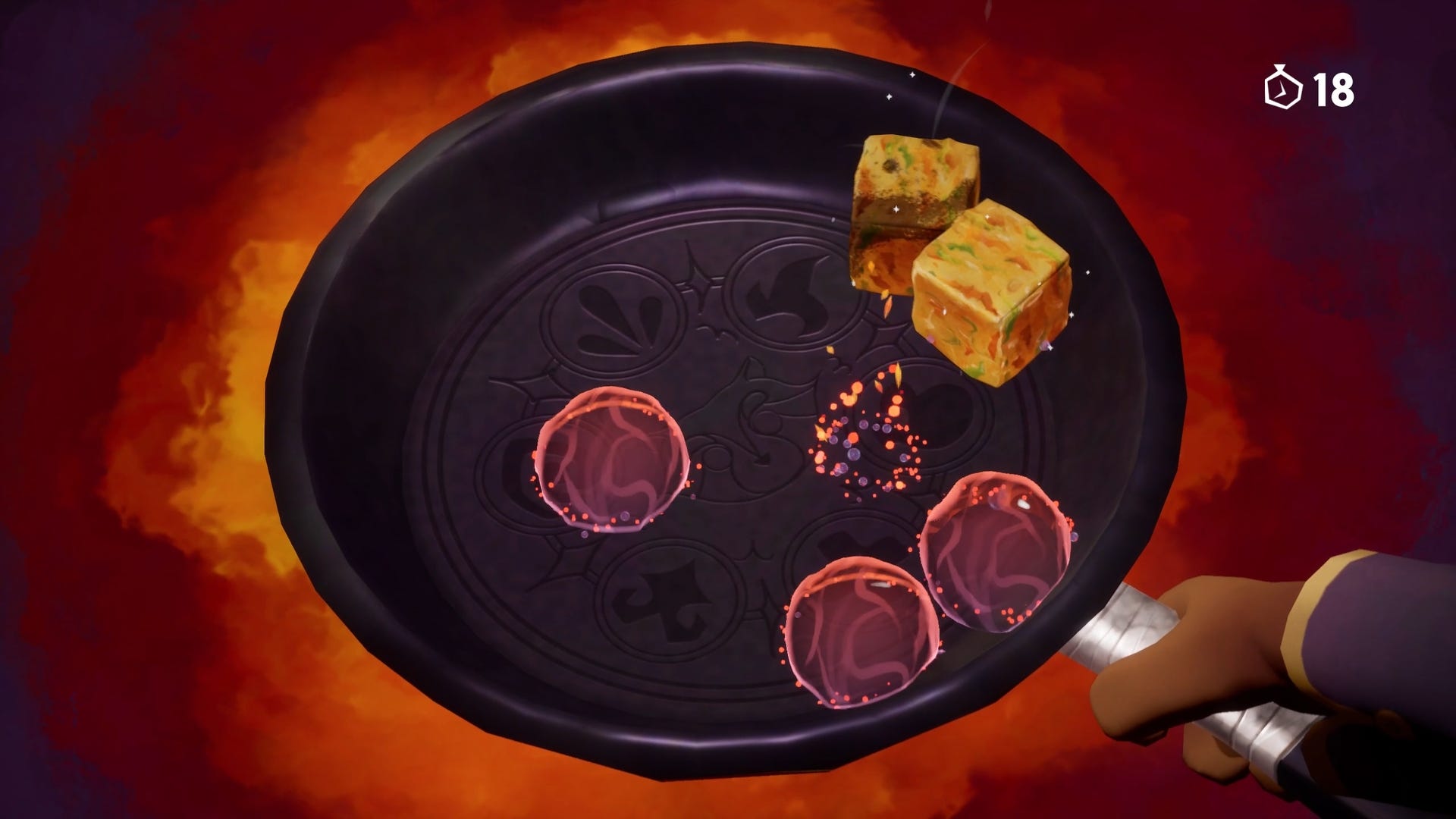
As I upgraded my kitchen equipment, these mini games became noticeably more difficult. For chopping, suddenly, some very hard pieces appeared that simply couldn’t be chopped. I had to carefully avoid them while chopping the soft food located between them. Or when I was sautéing, the pieces of food grew much larger, making it significantly harder to dodge the dangerous fire bubbles. And occasionally, a Caretaker would bring back an unknown ingredient I couldn’t cook with until I studied it, requiring me to play one of the mini games with a specialized goal.
--- SOLVING THE GRID PUZZLE ---
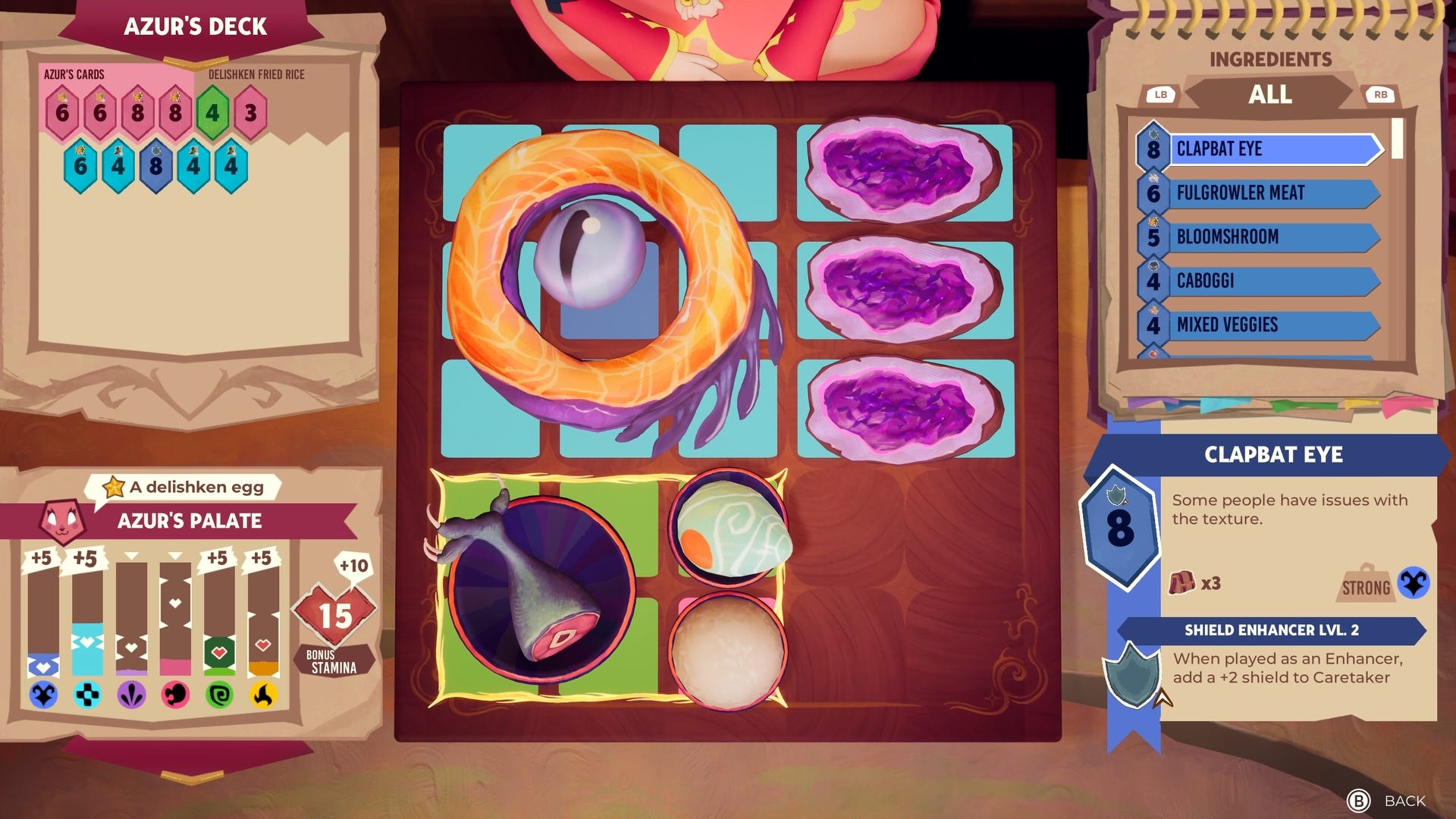
Cooking for your regular restaurant patrons is entirely different from cooking for a Caretaker. When preparing a specialized meal for them, you get a strict five-by-five grid to lay out the ingredients. First, you select a base dish. This uses ingredients on hand and places them in a specific way on the grid. The base dish is the foundation of every meal, so it’s wise to choose accordingly. Some can provide different combat effects, like more stamina or granting you a certain number of free redraw chances in a fight.
After picking the base, you get to decide how to place everything else on the grid. Every ingredient added to the meal grants the caretaker a card of its flavor, some cards just provide damage, while others can give special battle effects. Hitting specific flavor windows grants the Caretaker five extra health points per matched flavor, or stamina in this game. It becomes a highly strategic puzzle of figuring out exactly which ingredients to put into a meal to make a specific venture easier. Some ingredients are much nicer to play with than others. They take up very little space. Meanwhile, the more powerful ingredients can take up a massive three-by-three spot with a small hole right in the middle to put something else. You can rotate these odd shapes to fit them perfectly into the grid. The biggest challenge is deciding which flavor cards are best to send them on a venture with, versus giving them a bigger boost to their stamina, which rarely lines up for a perfect meal.
--- PAPER PUPPET COMBAT ---
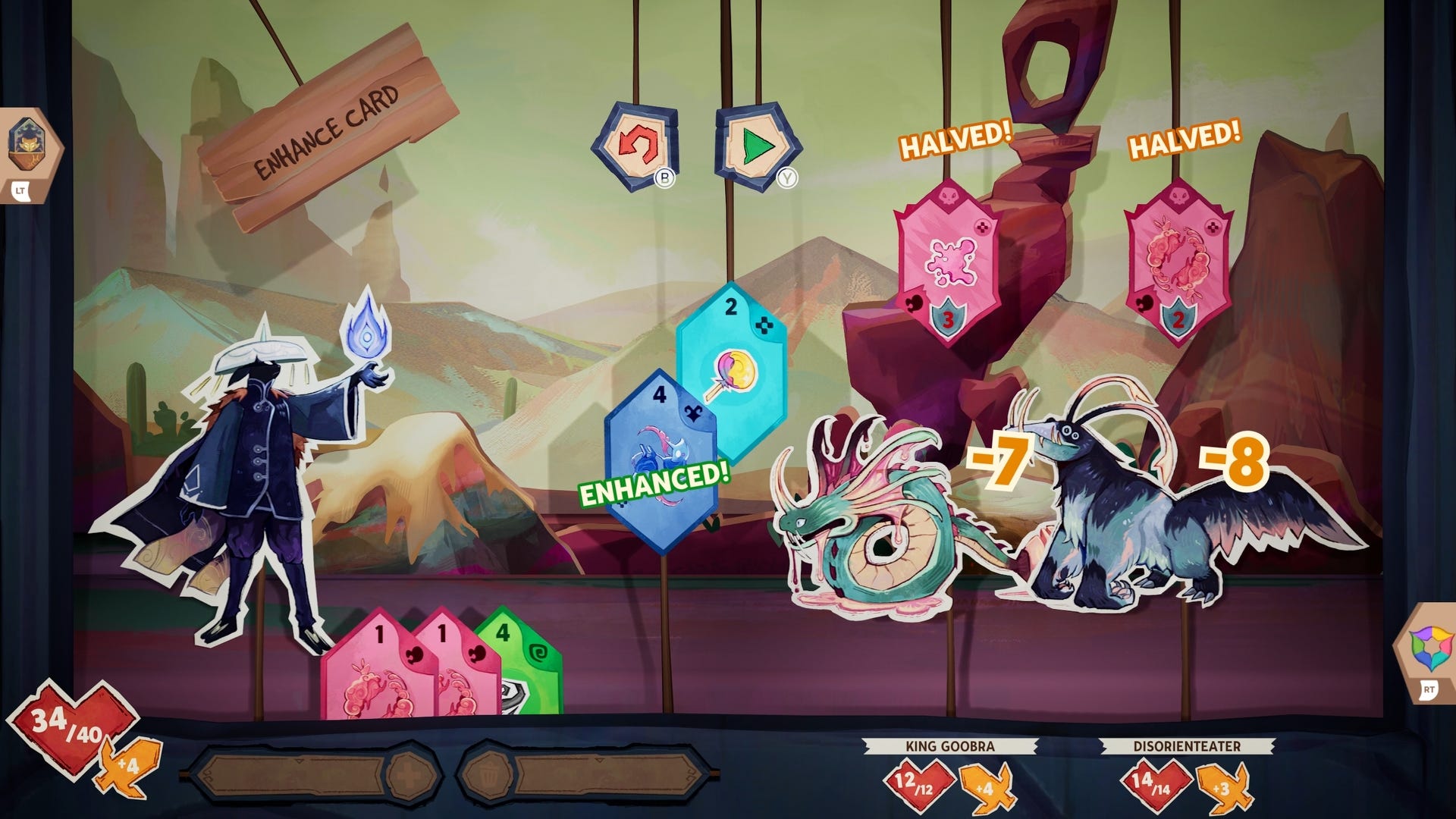
Once the cooking is done and the sun goes down, you visit the local Teahouse where the Caretaker will regale you with their most recent adventure. This kicks off the Night Phase where you oversee the Caretaker adventure. You can explore the town for night exclusive ingredients beforehand, but the main event happens on the venture map. The retelling is framed as a charming, flat paper-puppet theater performance, giving the experience a distinct storybook charm.
But do not let the cute paper puppets fool you. The card based battles can be complex, utilizing the six basic flavors. You manage Umami, Sour, Spicy, Sweet, Salt, and Bitter. You must play a card with a relevant flavor and a higher number than the enemy to successfully attack. Playing the wrong flavor results in an automatic loss for that round and taking direct damage. Flavors actively enhance or balance each other. Using a balancing flavor instantly halves the enemy card value.
The balance-and-enhance mechanic for flavors can be deciphered either by the symbols and their placement on the cards, or you can always bring up the flavor wheel to see how the flavors interact. Here is how that math actually works in your hands. When fighting a sweet monster, I would see they are about to attack with a sweet card that has a power of six. I would select a salt card, the balancing flavor, with a value of two. Now the sweet monster card only has a power of three. However, their power is still higher than mine, so I would ultimately lose the clash.
To win, I could then balance my salt card with a bitter card possessing a power of four. This brings my total card power up to six. Finally, the Caretaker base damage would be added to the card power, and I would do that much total damage to the enemy. During all this intense math, I could spend two stamina to discard my entire hand and redraw cards, or spend one stamina to draw more cards until my hand was completely full. There were times a specific enemy forced me to redraw multiple times to get the only card I had to defeat them.
--- PACING AND PROGRESSION ---
If your venture is cut short after a tough fight, the Caretaker is taken out, and only some of the items they found are brought back to town. However, you can purchase some of the things left behind from a specific NPC from a failed run if you really want them. To avoid constantly failing a run, you will need to explore different paths and remember what enemies are where. The different nodes on the ventures hold the same monsters every time, so unless you forget what’s where, it gets easier the more you venture.
However, I did experience some pacing issues mid-game. I usually don’t like card-based games. I didn’t even realize this game had them until I started, but they were very well done. Still, a problem arises when the daily cooking mini-games for the restaurant become repetitive. The loop gets terribly monotonous. The absolute low point for me in the game was when it felt like I was unable to make progress because the ventures kept kicking my butt. I didn’t need the money and XP gained from cooking; I just wanted to continue fighting.
It was around that time I realized the local crafter could actually upgrade my kitchen. Upgrading equipment increases the base level of the ingredients used in meals, directly resulting in stronger combat cards. Before then, I was just using the crafter to buy more garden beds or spruce up the restaurant for extra cash and XP, completely missing that I could have been buffing my combat capabilities. Missing that crucial kitchen upgrade system early on led to a noticeable struggle.
Thankfully, the game eventually introduces some much-needed automation to kill the monotony. My plants were being watered for me in the morning. I got help around the kitchen in the form of one task being handled when making meals for patrons, like if I did not want to deal with the roasting mini-game, it could be done automatically for me every day. Getting to a point where some automation was introduced ended up lighting that fire again for more enjoyment. The pacing would just be vastly improved if these features were dripped in much earlier.
--- CAN THE KIDS WATCH? ---
If the kids wanted to watch, this one is an incredibly safe bet. There is zero gore, no foul language, and instead of a violent brawl, the combat looks like a playful pop-up book where literal cardboard words pop out to show hits and misses. The world is colorful, whimsical, and thoroughly kid-friendly to watch. The characters also brought a lot of good energy to the experience.
--- RECOMMENDED? ---
This was a great mix of cozy farming, cooking, and card-based combat. Only when I stopped making progress did I feel the chores and cooking were becoming monotonous, and then I reached a point where some automation was introduced, pulling me right back into the fight. I would definitely recommend checking this game out if you want a comfortable, cozy challenge.