

Title: Gothic 1 Remake
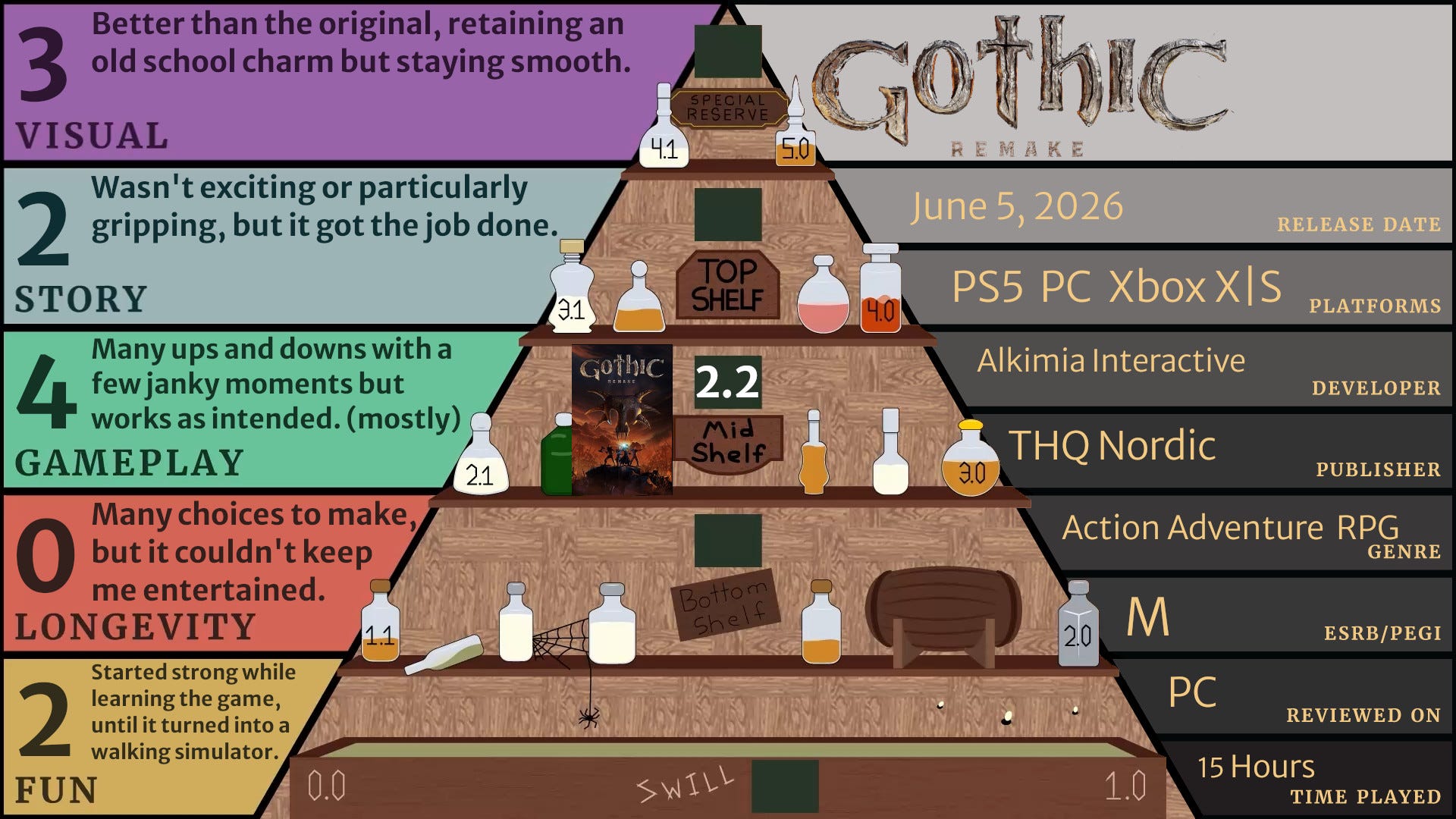
Release: June 5, 2026
Platform: PC PS5 Xbox Series X|S
Developer: Alkimia Interactive
Publisher: THQ Nordic
Genre: Action RPG
ESRB: M
Reviewed on: PC
Time Played: 15 Hours
--- A BRUTAL WELCOME TO THE NEW CAMP ---
I am wandering through the New Camp, totally lost. A bandit approached me earlier and asked me to talk to another character who was in charge of water so I could gather some for the surrounding farmers. He did not tell me where I might find this guy. So I started wandering around, looking for the specifically named NPC. I spent a full day walking in circles. I was unable to find him anywhere. The next day, the bandit stopped me to chastise me for not doing what he asked and proceeded to beat me up for it. I drew my weapon, won the fight, and the quest was finished after that. But I would have rather actually finished the quest proper had I known where the second guy was.
That is what makes Gothic Remake so loved by some, or hated by others. It is an Action Adventure RPG that doesn’t hold your hand. Instead, it expects you to navigate and discover things on your own. You play as the “Hero” with absolutely no character customization options. The setting throws you into an old mining area. Condemned prisoners were originally sent here to dig up magic crystals for the kingdom. A mysterious device placed a magic barrier around the mine, trapping everyone inside and allowing the prisoners to take control. The zone is now run by bandits. The king is forced to trade with them for the magic rocks.
--- LEARNING TO SURVIVE THE BARRIER ---
You are sent into the zone to deliver a letter to the lead fire mages. Upon entry, you are immediately beaten up by some locals. Thankfully, right after that, you meet someone who gives you basic survival advice before leaving you to fend for yourself. From there, you have to figure out survival and how the society inside the barrier operates. It is split into three main camps. The Old Camp features Warders and Fire Mages who want to eventually break the magical barrier. The New Camp, which branched off from the Old Camp, features bandits and water mages who also want to break the barrier but disagree with the Old Camp on how to do it. Then you have the Swamp Camp. They are home to the Templars and are completely dedicated to the production and use of “swampweed” to commune with their deity, the Sleeper.
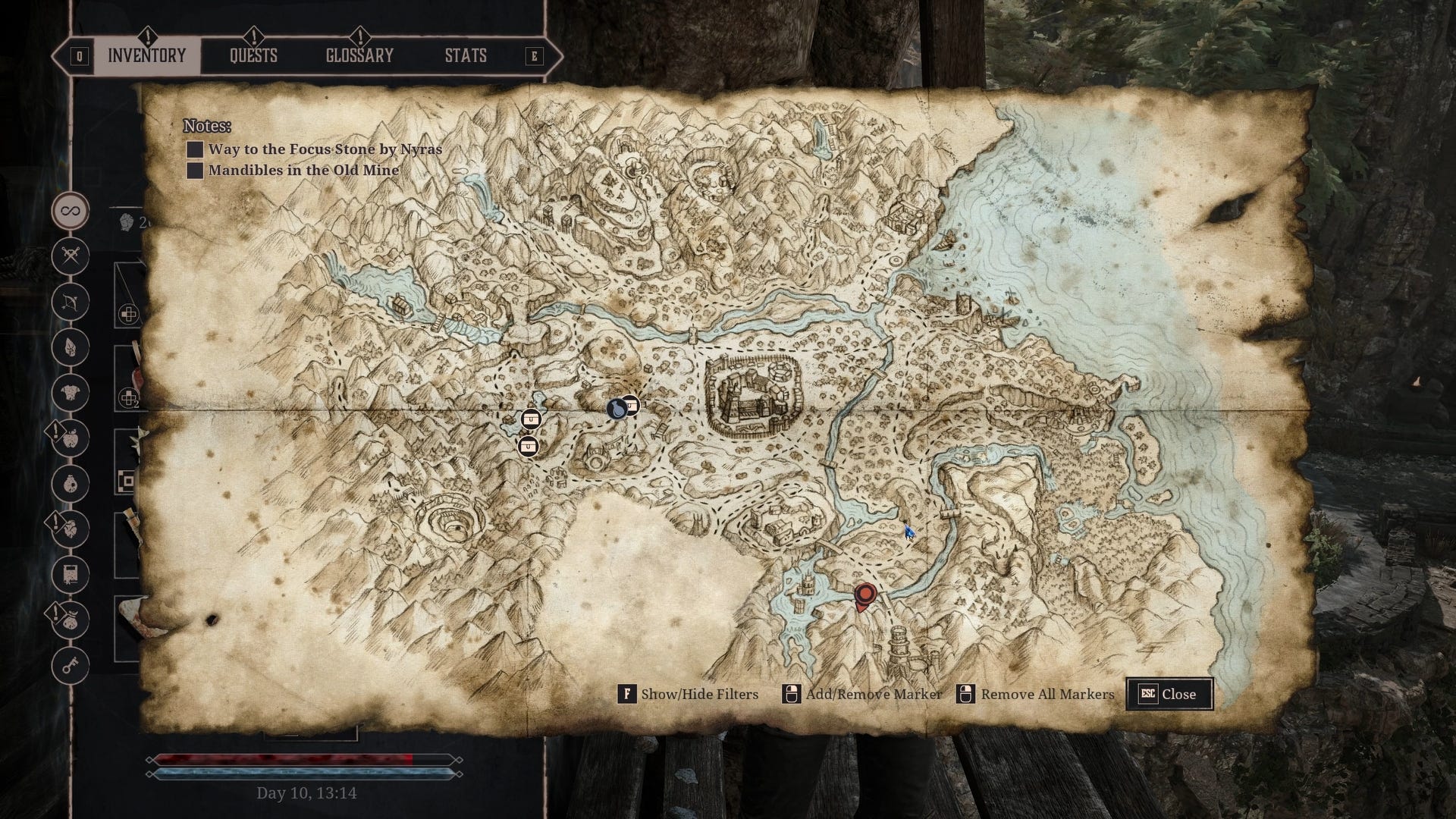
Exploring this world offers no hand-holding at the beginning and very little guidance on where to go. There are no default quest waypoints or map markers. However, you can purchase a map of the entire zone early on. This map shows your current location, the direction you are facing, and lets you place custom markers. This makes navigation much easier. The world feels nearly perfect in size. It is not so small that everything feels cramped, or so big that travel feels tedious. The world feels huge and intimidating at first, but it shrinks as you gain familiarity with an area and expands again when a quest takes you somewhere completely new.
It is an Action Adventure RPG that doesn’t hold your hand. Instead, it expects you to navigate and discover things on your own.
--- ECONOMICS AND EXPLORATION ---
You have to be careful where you step. There are no indicators or warnings for restricted areas. I walked past a guard into a building I wasn’t allowed in, and I was attacked immediately. No warning or blocking my way. Travel gets much better and faster later on once a mount is unlocked. The mount is a tamed scavenger, a local beast that looks like a raptor. But it is obtainable only by finding the specific NPC who tames them and completing a few tasks for him. You spend a lot of time jumping through hoops for people that will take you back and forth from camp to camp for hours. Thankfully, there are no carrying capacity limits. You can pick up as much junk as you want.
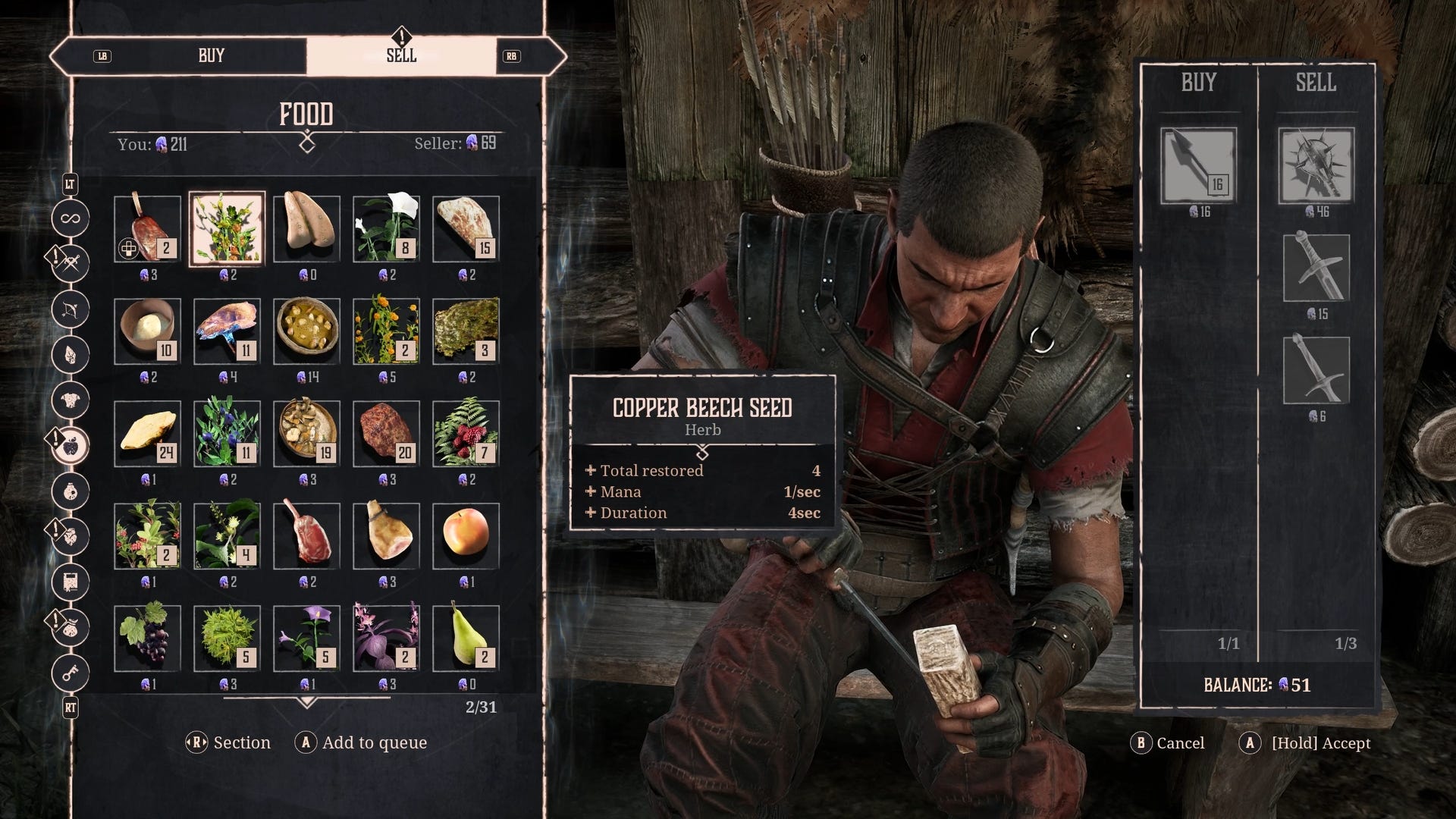
And you will need that junk to survive the brutal economy. Different merchants value items differently. Some pay more for herbs, while others pay nothing. They also use dynamic pricing. Overselling the same item to a merchant gradually lowers its selling price. Merchants have a finite amount of “nuggets,” the game’s currency, on hand. To maximize transactions, I used a strategy like buying all their arrows and selling enough junk to match the price and their exact nugget count perfectly. Navigating the dynamic merchant economy felt like a fun mini-game in itself for maximizing your profits. But the trading UI can be a bother. If you accidentally put something in the sell pile that you wanted to keep, you have to cancel the entire transaction and start over.
--- COMBAT, MUGGINGS, AND BOWS ---
Combat and survival are brutally unforgiving early on. Starting out it didn’t take long for a weak molerat to take me out, and the enemies only got scarier the farther into the game I got. But the early-game enemies did eventually become trivial as I leveled up and acquired better weapons, making them good sources of meat and sellable parts. You can use crafting mechanics like cooking and forging gear, but they require finding materials and learning recipes first. The only default recipe is cooking meat on a pan, which I stockpiled to heal myself.
I focused more on bow combat. It wasn’t that melee combat was hard to understand, it just really hurt to get hit, so I wanted to keep my distance in every fight. Improving weapon handling unlocks faster combos and finisher skills, but I never trained one-handed combat enough to use it. I found that if I started a fight from far enough away, I could take most enemies out before they got close enough to touch me.
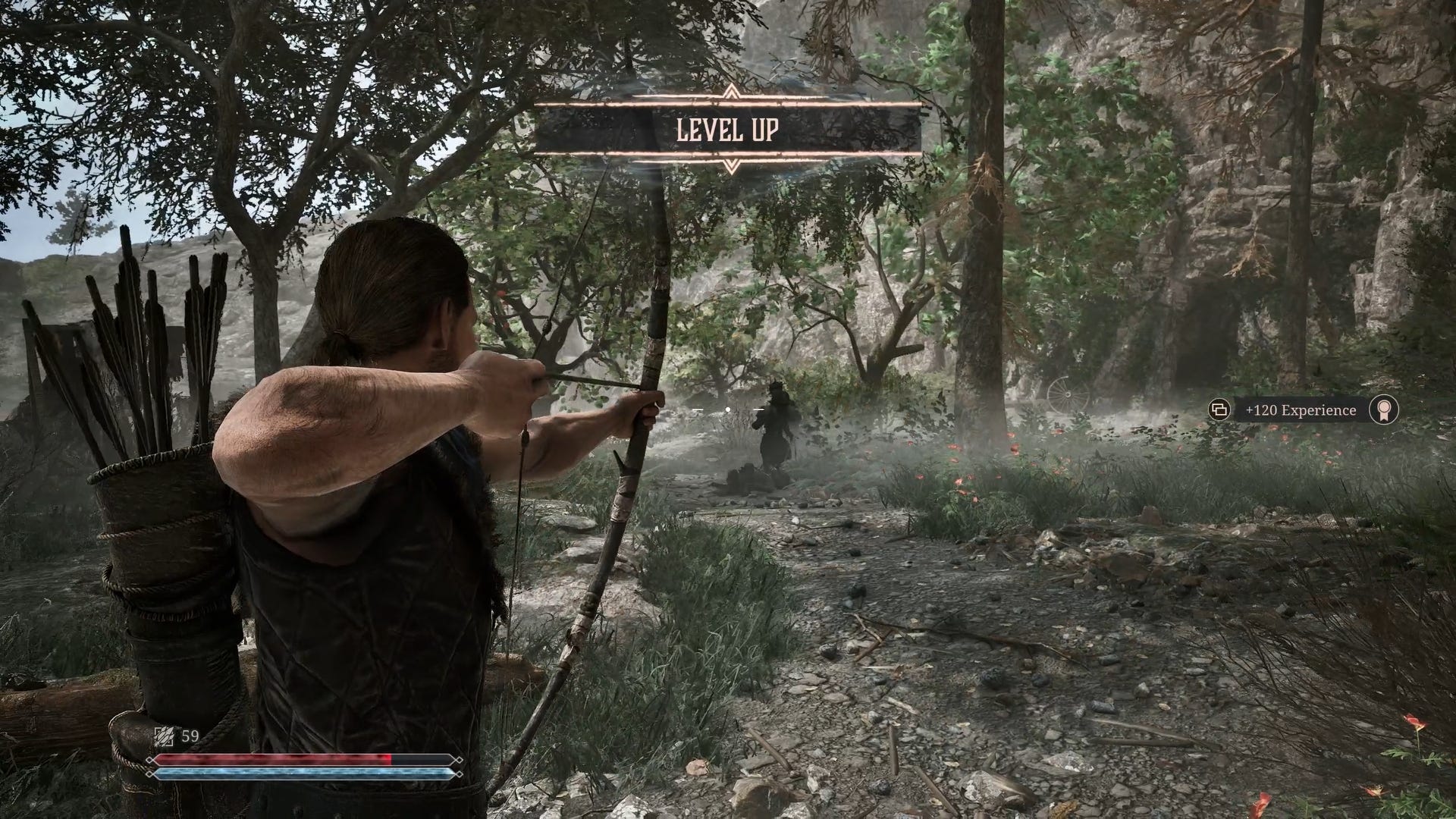
The combat features a unique knockout mechanic. NPCs often intend to knock you out rather than kill you. If knocked out, they will steal a bunch of your inventory, from trash to key weapons. I usually reloaded a save when this happened, treating it like a death because I would be too poor and defenseless after getting back up. But you can also knock out NPCs. Even with a sharp arrow through the face, they just fall to the ground. When they fall, you get a tiny one to two-second window to steal their equipment before they stand back up. Because I kept my distance with a bow, there were plenty of times when it was difficult for me to get up to an enemy and steal all of their gear before they got up.
But it was really nice to take all of their nuggets and weapons. Some of my best weapons came from that. And if they were a particularly mean, janky enemy, like a couple of blackmailers I refused to give money to who would constantly attack me if I got near, I could knock them out and take all of their equipment so they no longer had a means to kill me. There was also an option to execute a person instead of just looting them if I was feeling particularly mean after winning a duel.
--- PROGRESSION AND PUZZLES ---
Progressing your character is a slow burn between questing and combat to gain xp and level up, increasing Max HP and granting ten Learning Points, which are spent along with nuggets at NPC trainers. Most of my nuggets went to training. The most annoying part of training was figuring out who trained what and remembering their location when I finally had enough money and Learning Points to spend there. I thought it was really cool how the trainer explained to my character how they could get better at that task, like relaxing my shoulders and fusing to the earth when shooting a bow. I didn’t have to play any differently, but the power increase was noticeable.
It took me about eight hours of playtime to formally join one of the three camps and get basic armor, though the new armor didn’t feel much stronger than the rags I started with. The base armor given when I joined a camp still sucked, and I never made enough money to purchase the upgrades available at my camp. I focused mainly on offense over defense, which could have a lot to do with why I died after only a couple of hits…
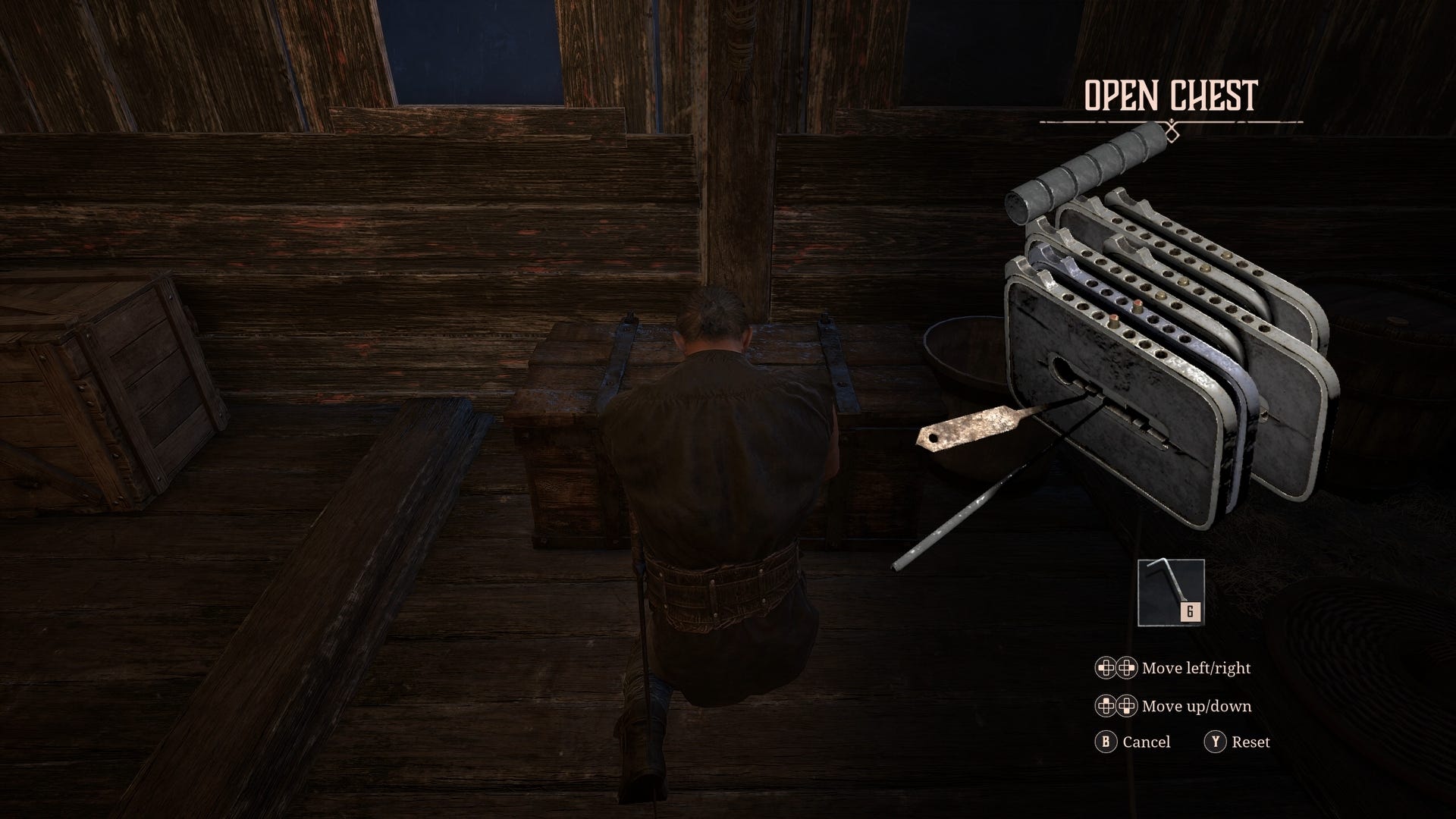
The one thing I really saw improvement in through training was lockpicking. It features a unique, interconnected tumbler puzzle. I fell in love with the first lockpicking experience, but then I started to encounter more difficult locks that took up way too much of my time. I would save right before attempting it and burn through my entire lockpick supply very fast, so I would reload and try again. After quite a few frustrating failed attempts, I marked the location on my map and returned later after speaking with a lockpick trainer. Then it was fun again, but still a challenge. Trying to memorize which tumblers affected others and how was tough but fun. With no training, the lock would fall back to the beginning if a pick broke, but with some training, everything stayed, and I could start where my pick broke, making the process so much nicer and more enjoyable.
--- SIGHTS, SOUNDS, AND SLOW PACING ---
Visually, you have to remember it is a remake of a 21-year-old game. I didn’t play the original, so I can’t compare, but overall the visuals are good, though definitely not latest-generation. Character models feel a little stiff, but the environments are pretty and distinct. The varied landscapes prevent you from feeling lost or like you are walking in circles through repetitive trees and bushes. The overall audio is good, but the ambient weather sound effects are almost too realistic. Specifically, the wind is almost too realistic. I hated it because it sounded exactly like actual wind blowing directly into my ears.
Ultimately, the pacing is very slow. It takes over ten hours and still doesn’t pick up speed or momentum. I played for fifteen hours total before deciding to put it down. The lack of direction for simple quests is incredibly frustrating. I never got to experience the cool and intense melee combat the game is known for. I had fun learning the game, but it quickly turned into a dull walking simulator.
--- CAN THE KIDS WATCH? ---
After fifteen hours, there were only a few things I found you may want to watch out for, like a lot of cursing throughout the game. The first cut scene has some dude literally torn in half by an orc. Beyond that, you get covered in blood after combat, which can then be washed off in water, leaving a couple of red pools. There aren’t copious amounts of blood flying everywhere, but it is visibly present. Swampweed is a prevalent in-game drug used by nearly everyone for relaxation, complete with a faction and village dedicated to its production and religious use. The game is rated M, but I’ve seen much worse than this with a mature rating.
--- RECOMMENDED? ---
If you’re a fan of the original, I’m sure you’ll love this. If you’re unfamiliar with the game and this is your first experience, like me, I’d leave this one to the original fans. Without the backing of nostalgia, this game doesn’t offer many entertaining aspects. Don’t get me wrong, there are some fun and interesting mechanics to play with, but more than half of my time with the game was spent running around and trying to find specific people to talk to. Not exactly an exhilarating game to play. If it takes more than fifteen hours to pick up pace, I’d rather play something else.